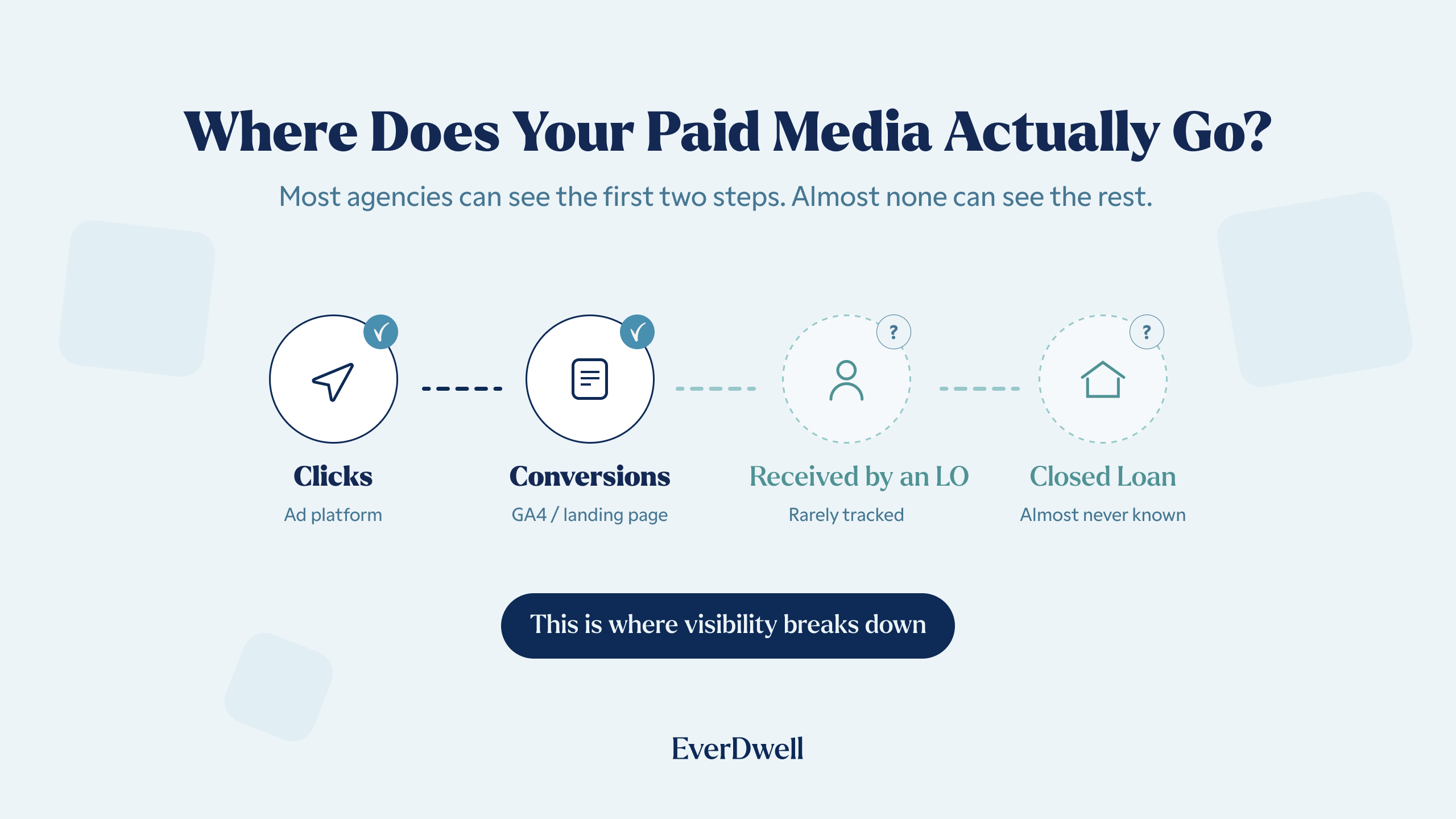


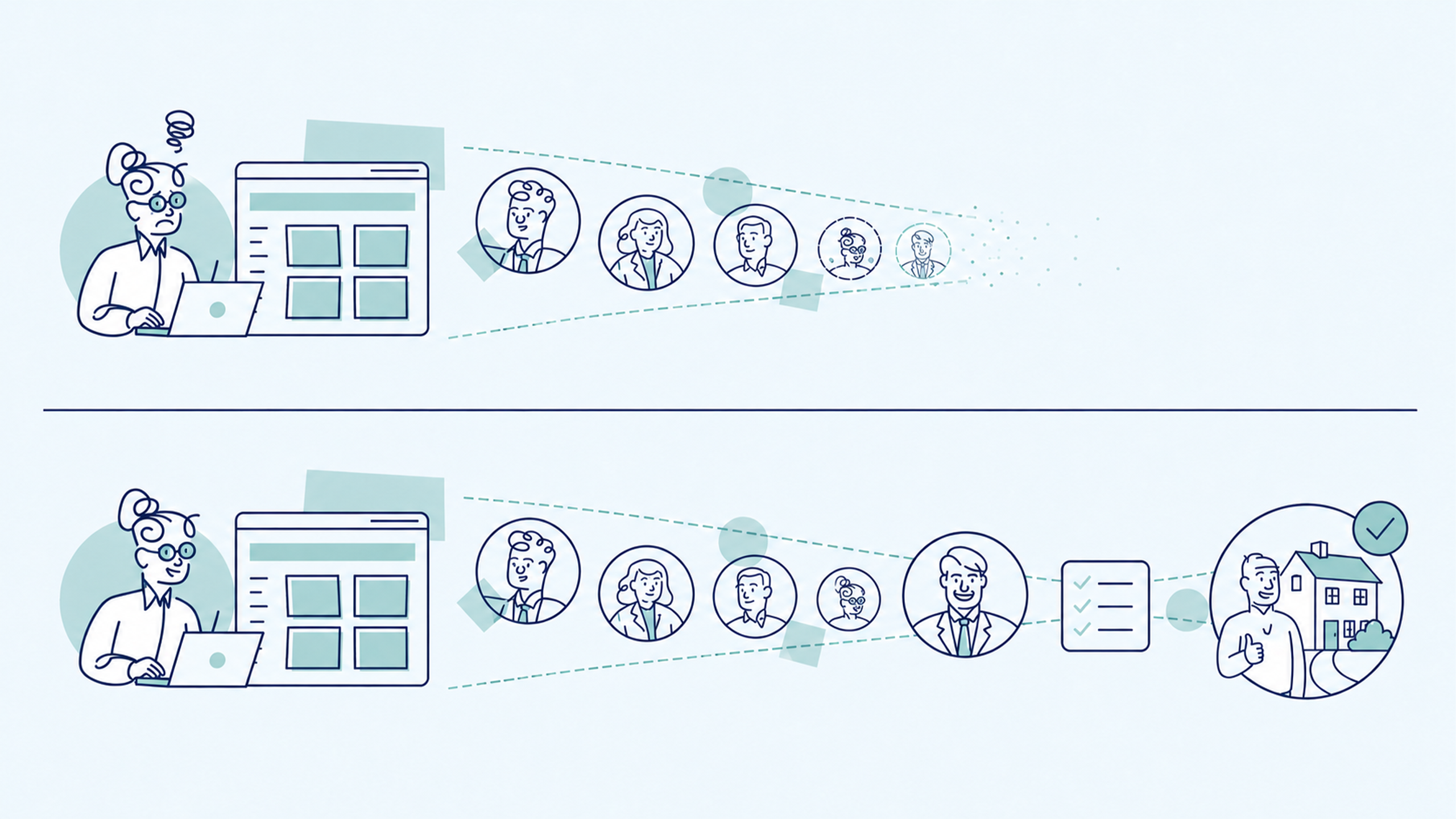
For as long as HFA programs have existed, there has been a gap in the story.
An HFA builds a first-time homebuyer program. They secure the funding, design the eligibility criteria, build out the loan officer network, and invest in driving awareness. A prospective buyer finds the program and wants to move forward.
In most cases, what happens next is this: the buyer lands on a page with a list of approved loan officers and picks one. Maybe alphabetically. Maybe by location. Maybe just whoever is at the top of the list. The HFA has no visibility into that interaction — who the buyer chose, whether the loan officer followed up, whether the conversation went anywhere.
That’s the model most HFAs are still running today. A directory. A list of names. And then silence.
Not because loan officers aren’t doing their jobs. Not because the HFA stopped caring. But because there was no infrastructure connecting what happened after that directory visit back to the people who built the program. The homebuyer either became a homeowner or they didn’t, and the HFA had no reliable way to know which — let alone influence the outcome.
That gap has cost HFAs more than most realize — in program performance, in homebuyers who never closed, and in the ability to make the case for continued investment.
The real problem with not knowing
When you can’t see what happens to your leads, you can’t improve your program. You can’t identify which loan officers are converting and which ones aren’t following up. You can’t tell whether the leads you’re generating are actually ready to buy, or whether they’re dropping off somewhere in the process. You’re optimizing blind.
But the more immediate problem is the one that shows up at the board table.
Every HFA admin eventually has to answer for their program’s performance. They stand in front of a board, a legislative committee, or a funding body and make the case that the program is working — that the investment is producing homeowners, not just leads. And for years, the best most HFA admins could offer was incomplete information. Impressions. Applications. Leads sent.
Not closed loans. Not families who got into homes because of this program. Not a direct line from program spend to program outcome.
That’s a hard position to defend. And it’s made harder by the fact that the data to tell that story existed somewhere — it just wasn’t visible to the people who needed it most.
Why the gap existed
HFAs have always been good at storytelling. They know how to communicate the value of homeownership, how to reach first-time buyers who may not know a program like theirs exists, and how to make a compelling case for why someone should take the first step.
What most HFAs were never built to do is convert that interest into a closed loan.
The awareness side of the equation got the investment. Beautiful program websites. Outreach campaigns. Community partnerships. Social content designed to reach first-generation buyers, lower-income families, and people who had written off homeownership as something that wasn’t for them.
And then those buyers would land on the website, read about the program, and face a directory of loan officer names with no guidance on who to call or what to expect. The storytelling ended right where the conversion needed to begin.
The best way for a prospective homebuyer to understand whether a program can actually help them isn’t to read about it — it’s to go through a quick, structured assessment that looks at their specific situation and tells them clearly where they stand. And once they know they’re eligible, the most important next step isn’t a form submission or an email address. It’s a connection with a real person who can walk them through what comes next.
That handoff — from awareness to assessment to human connection — is where most HFA programs had a gap. Not because the loan officers weren’t available. Because the infrastructure to get a buyer from curiosity to conversation didn’t exist. And without that infrastructure, there was nothing to track, nothing to measure, and no way to know whether the storytelling was producing homeowners or just traffic.
What visibility looks like now
EverDwell was built to close that loop.
When a prospective homebuyer interacts with an HFA program through EverDwell, they go through a quick check — a short assessment that determines whether they’re genuinely ready to be matched with a loan officer. This happens before the lead ever reaches an LO. It means the leads that do get routed are pre-qualified: buyers who meet the basic eligibility criteria, who understand what the program offers, and who are ready to move forward.
That matters because it changes the quality of the handoff. Loan officers receive fewer leads they can’t work with. Conversion rates go up. And the HFA can see that playing out in real time.
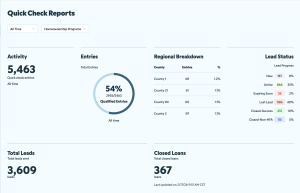
The dashboard above is what an HFA admin sees when they log into EverDwell. Quick check entries. Qualification rates. Leads sent to loan officers. Lead status — new, active, expiring, closed. Regional breakdown by county.
This is not a report that gets generated once a quarter and emailed as a PDF. It’s a live view of how the program is performing, updated continuously as homebuyers move through the process.
When MassHousing went live on EverDwell, the first lead came in 10 minutes after launch. By the end of the first 24 hours, 111 leads had been generated — all of them tracked, all of them visible.
The lead status column is where the story changes. For the first time, an HFA can see — at a glance — how many of the leads they generated are actively being worked, how many have gone quiet, and how many have closed. The outcome that used to disappear the moment a lead left the platform is now visible from the same dashboard where the HFA manages everything else.
What loan officer visibility actually changes
Knowing what happened to your leads isn’t just a reporting improvement. It changes how HFAs manage their loan officer networks.
When you can see that a loan officer received 40 leads in the last 30 days and followed up with 12 of them, you have something to work with. You can have a direct conversation. You can make decisions about who stays on the ambassador list and who doesn’t. You can recognize the LOs who are performing and route more leads to them.
Without that visibility, HFAs have historically managed their LO networks by feel — by reputation, by relationships, by the occasional complaint from a homebuyer who never heard back. That’s not a system. It’s a guess.
With EverDwell, the performance data is built into the platform. Every LO in the network has a record. Every lead they receive is tracked. How quickly they respond, how far the buyer progresses, whether the loan closes — all of it is visible to the HFA administrator without requiring any manual reporting from the loan officer themselves.
That accountability changes behavior. Loan officers who know their responsiveness is being tracked respond faster. Buyers who get faster responses are more likely to stay engaged. Programs that retain more buyers close more loans. And HFAs that close more loans have a much easier conversation with their boards.
The board conversation that changes
Here’s what the old version of that conversation looked like:
“We closed 412 loans this year.”
That’s it. A number. No story behind it. No way to explain what drove it, which parts of the program worked, which loan officers performed, or what would need to change to close 600 next year. Just a count, reported after the fact, with no lens on how it happened.
Here’s what it looks like now:
“We generated 4,200 qualified leads this year. 412 of them resulted in closed loans we can trace directly back to our program. Here’s which counties they came from, which loan officers converted them, and where the other leads are in the pipeline right now.”
Those are two completely different conversations. One is an HFA admin asking a board to take their word for it. The other is an HFA admin showing exactly how the program is working — and making a data-backed case for what comes next.
The receipts matter — not just for defending the current budget, but for making the case for future investment. When you can show your board a direct line from program activity to closed loans, the argument for expanding it writes itself.
This is just the beginning
Visibility into what happens to leads is the first problem we solved. It won’t be the last.
Working across HFAs in California, Massachusetts, and Texas, we see the same patterns repeat. The same gap between awareness and conversion. The same friction points where first-time buyers drop off. The same questions HFA admins can’t answer because the data was never captured.
These aren’t unique problems. They’re industry-wide problems that every HFA is quietly managing around.
We built EverDwell by watching what’s actually breaking — not by guessing at what the industry needed. Lead visibility was the most urgent gap. Every HFA we’ve spoken with recognized it immediately. But it sits inside something larger: the full journey from the moment a buyer discovers a program to the day they close on a home, and the infrastructure to give HFAs a clear view of every step in between.
We built EverDwell because that infrastructure didn’t exist. Now it does.
EverDwell is currently live with CalHFA, MassHousing, and TDHCA. If you’re an HFA admin interested in seeing the platform, request a demo.